


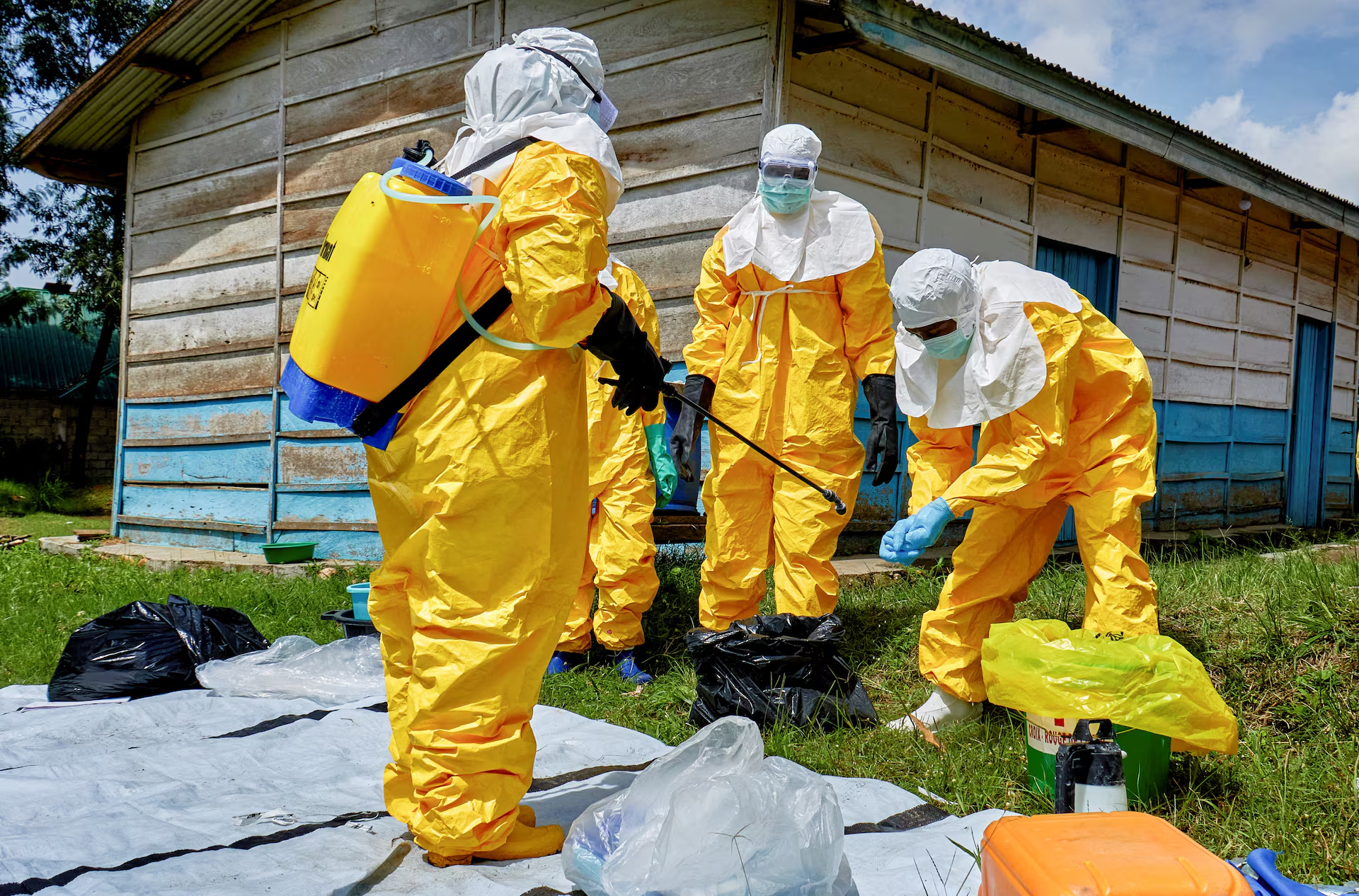
On May 16, 2026, the World Health Organization declared the outbreak of Ebola Disease in the Democratic Republic of Congo as a Public Health Emergency of International Concern (PHEIC). The Democratic Republic of the Congo is currently dealing with a new Ebola outbreak caused by the rare Bundibugyo strain of the virus.
Explained By: Ralitsa Massah | LVL Fact Checker
On May 15, 2026, the DRC Government, through the Ministry of Public Health, Hygiene and Social Welfare, in a press statement (in French, the country’s official language), declared a 17th outbreak of Ebola virus disease in the health zones of Rwampara, Mongwalu, and Bunia, in Ituri province.
The statement, which was signed by the DRC Minister of Public Health, Hygiene and Social Welfare, stated that the presumed index case was reportedly a nurse who died at the Evangelical Medical Center in Bunia after presenting symptoms including fever, bleeding, vomiting, and severe weakness.
This is a global Public Health concern because there is currently no approved vaccine or treatment for this strain, and there is a high risk of international spread.
What is Ebola?
WHO defined Ebola disease as a severe, often fatal illness in humans, and there are three different viruses known to cause the large Ebola outbreaks. They are the Ebola virus, the Sudan virus, and the Bundibugyo virus, which is currently affecting Congo.
According to Scientists, the Bundibugyo virus disease (BVD) is a severe and often fatal form of Ebola disease caused by the Bundibugyo virus, one of the Orthoebolavirus species. It is a zoonotic disease, with fruit bats suspected to be the natural reservoir.
The natural reservoir of a virus means the specific environment or animal where an infectious pathogen naturally lives and reproduces or where it survives naturally. Please note that pathogens are tiny infectious organisms that cause diseases.
Signs and Symptoms
Ebola causes signs and symptoms that can be sudden and include fever, fatigue, malaise, muscle pain, headache, and sore throat. They are followed by vomiting, diarrhea, abdominal pain, rash, and symptoms of impaired kidney and liver functions.
The incubation period or interval from infection to the beginning of symptoms varies from 2 to 21 days.


How does Ebola spread?
Ebola can spread in different ways. The virus can get into the human population when people come in close contact with the blood, secretions, organs or other bodily fluids of infected animals.
Once in the human population, the virus can spread from person to person through direct contact blood or body fluids of a person who is sick with or has died from the disease and objects or surfaces that have been infected with body fluids from a person sick with the disease or who has died from the disease.


Prevention of Ebola
The American Centers for Disease Control (CDC) recommends avoiding contact with body fluids, wearing personal protective equipment, and monitoring your health.


Death Toll and Cases
As of May 16, 2026, the WHO reported eighty (80) laboratory-confirmed cases, 246 suspected cases, and 80 suspected deaths in the Ituri Province of the Democratic Republic of Congo. In addition, there are two laboratory-confirmed cases (including one death) reported in Kampala, Uganda, with individuals travelling from the Democratic Republic of Congo.
Hotspots in Congo
The outbreak is mainly affecting the Mongbwalu Health Zone, the Rwampara Health Zone, and the Bunia Health Zone, all located Ituri Province. A region near the borders with Uganda and South Sudan, known for mining and trading. Report says there are 24 suspected cases currently in isolation facilities across the three Health Zone.
Public Health Intervention
Authorities and international partners have put several measures in place and are responding through rapid response teams, isolation and treatment centers, contact tracing, cross-border surveillance, community awareness campaigns, safe burial practices, distribution of medical supplies, and protective equipment. WHO, Africa CDC, and Congo’s Ministry of Health are also working with neighboring countries to prevent further spread.

